The March on Washington was built to speak to Congress and the country. Bayard Rustin's manual for it told marchers to stay off Capitol Hill and let the crowd itself be the message (Organizing Manual No. 2). But in August 1963 the March was also heard on the other side of the world, and it was pulled into the Cold War before it had even happened.
A statement from Beijing
On August 8, 1963, the New China News Agency broadcast a statement from Mao Zedong, the chairman of the Chinese Communist Party, in English to Asia and Europe. Mao called on "the people of the world to unite against racial discrimination by U.S. imperialism and to support the American Negroes in their struggle." He said that Robert Williams, a former NAACP chapter president from Monroe, North Carolina, then living in exile in Cuba, had twice asked him for such a statement that year.
Mao noted that "American Negro organizations have decided to start a freedom march on Washington 28 August in which 250,000 people will take part." He dismissed President Kennedy's civil rights bill as "so-called" civil rights legislation, meant "to lull the fighting will of the Negro people." According to the National Archives, Communist parties around the world hailed it as the first unconditional support for the marchers from a major world leader.
Ten thousand in Peking
Four days later, on August 12, more than ten thousand people gathered at a rally in Beijing. That night a long cable went out in the rally's name; it reached the NAACP in New York the next morning. It praised "the dauntless and indomitable spirit" of Black Americans in their struggle, and blamed the Kennedy administration as the "chief culprit."
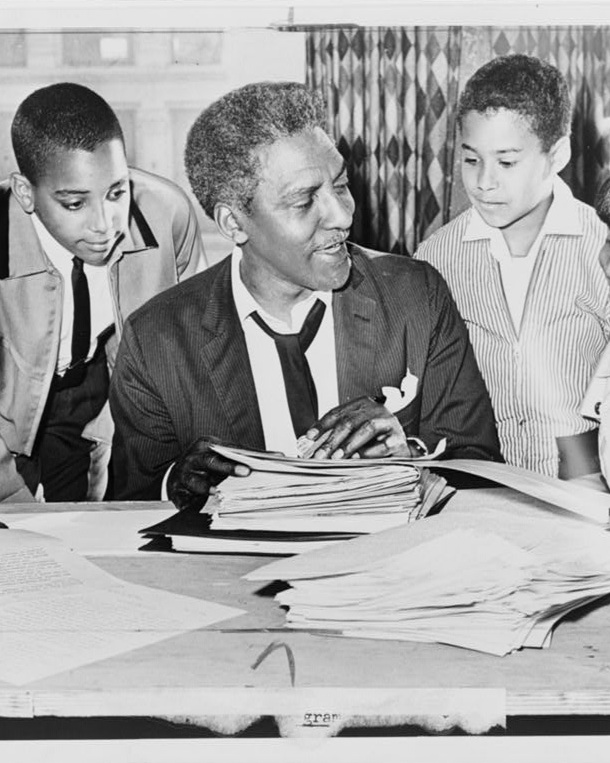
The next day, August 13, Senator Strom Thurmond stood up in the United States Senate and attacked the March by going after its organizer, Rustin, and his youthful membership in the Young Communist League (Arrested, Attacked, Pardoned). Rustin's critics at home and the March's admirers in Beijing were arguing over the same event in the same week.
The answer
The March's leaders could not ignore the message from Beijing. On August 21, a week before the March, Roy Wilkins, executive secretary of the NAACP and one of the March's ten chairmen, cabled the Chinese People's Committee for World Peace. He said the March was in support of the civil rights bill that Mao had dismissed. Then he turned the message around:
“We join you in your wish for peace but believe there can be no genuine peace without freedom for the individual within all nations… We await the opportunity to send our felicitations to Chinese citizens gathered in a huge demonstration in your nation's capital to protest living conditions under your government and welcomed there by your heads of state.”
The point was the March itself: Americans were free to march on their own capital, and Chinese citizens were not.
Why it was in Congress's files
All three documents, Mao's statement as an American monitoring report printed it, the cable from Beijing, and a copy of Wilkins's reply, survive in the files of the House Committee on Un-American Activities, next to the committee's marked-up copy of the March's organizing manual (The Copy Congress Kept). On the committee's copy of Mao's statement, someone has underlined Robert Williams's name and bracketed the passage about him. You can read all four pages, with transcripts, in Mao, Peking, and Wilkins: the Cables.
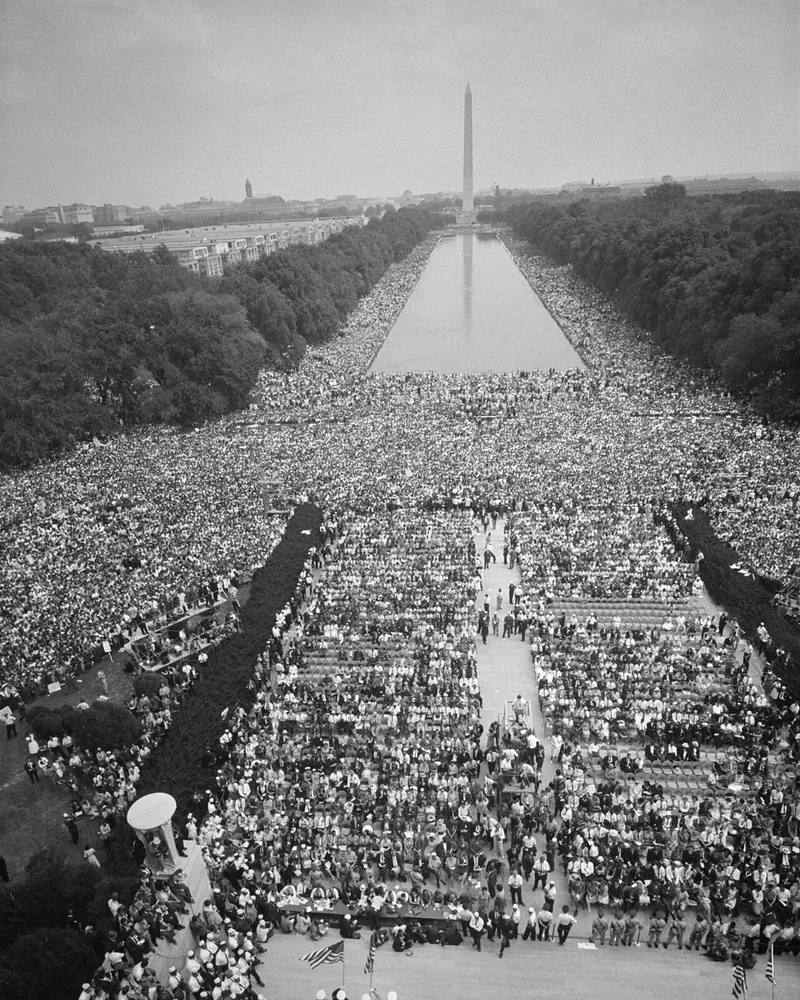
President Kennedy had already warned Congress about this. In his June 19, 1963 message proposing the civil rights bill, he said racial strife was "weakening the respect with which the rest of the world regards us." The March went off peacefully on August 28, and the world saw a quarter of a million people petition their own government in its capital, as Wilkins had said they would.
Sources
- "Text of Mao Statement," Chicom International Affairs, August 9, 1963 (New China News Agency broadcast, August 8), Committee on Un-American Activities, Records of the U.S. House of Representatives, RG 233 (NAID 7479802). The archive has the first two pages.
- Cable from the Peking rally, August 12, 1963, and Roy Wilkins's cablegram to the Chinese People's Committee for World Peace, August 21, 1963, RG 233 (NAID 7479803).
- National Archives, Center for Legislative Archives, "The March on Washington for Jobs and Freedom," including President Kennedy's message to Congress of June 19, 1963.