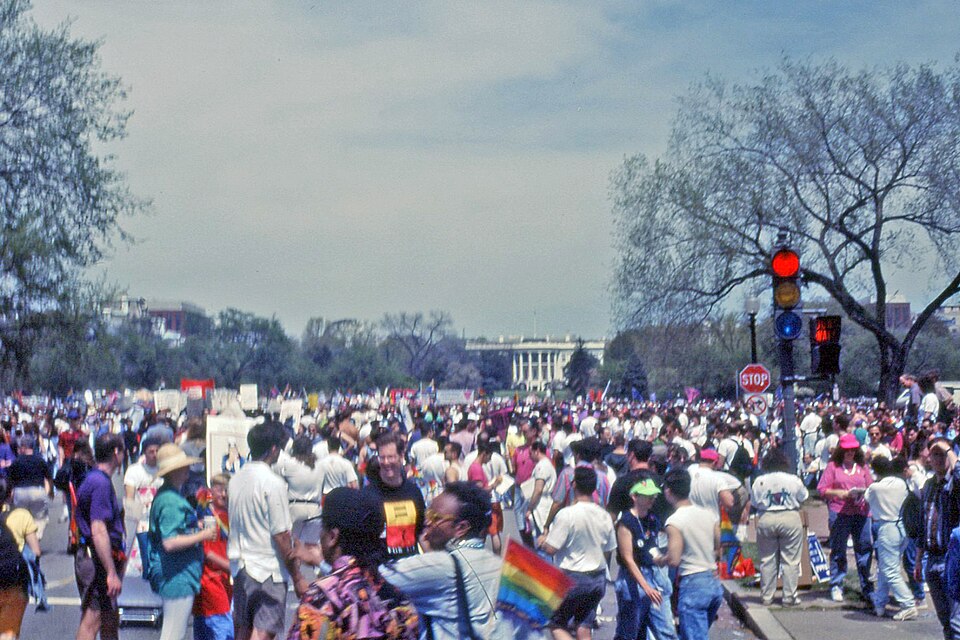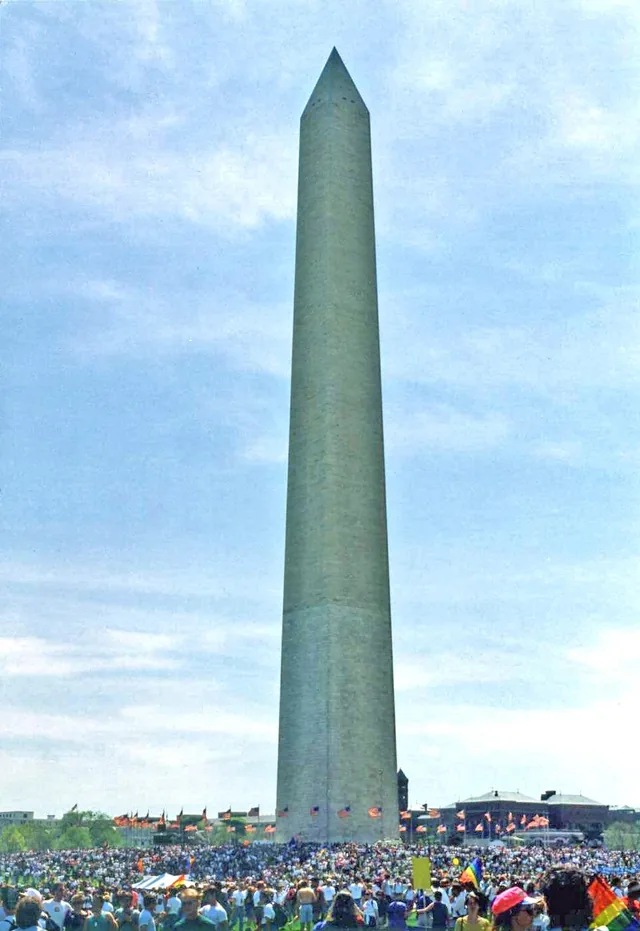
On Sunday, April 25, 1993, people from across the country filled Washington for the March on Washington for Lesbian, Gay, and Bi Equal Rights and Liberation. Organizers counted about a million. The National Park Service said 300,000. Either way, it was one of the largest demonstrations the capital had ever seen, and it began with a letter from Urvashi Vaid.
The letter
Gay and lesbian Americans had marched on Washington twice before, in 1979 and 1987. By the early 1990s they were more visible than ever, and still fighting on every front: the ban on gay people in the military, a wave of anti-gay ballot measures, the AIDS epidemic, and rising violence.
In January 1991 Vaid, then executive director of the National Gay and Lesbian Task Force, wrote to gay and lesbian organizations across the country proposing a third march. She invited them to send delegates to a planning meeting in Washington on March 9, 1991. That first meeting could not agree on a date. A second, in May, gave the march its purpose: to rebuild and re-energize activists, locally and nationally. Further meetings followed in Chicago, Los Angeles, Dallas, Denver, and Washington.
It took about two years. A twelve-member executive committee and a steering committee of more than 200 people worked by consensus on permits, logistics, and money. Bisexual activists, led by Lani Kaʻahumanu, won a campaign to put "Bi" in the march's name; a vote to add "transgender" fell short of the two-thirds it needed. The NAACP's board voted unanimously to endorse the march, a first formal tie between the gay rights movement and the oldest civil rights organization in the country.
Seven demands
The marchers came with a platform of seven demands. They asked for:
- a civil rights law covering lesbian, gay, bisexual, and transgender people, an end to discrimination by government and the military, and repeal of sodomy laws;
- a massive increase in funding for AIDS education, research, and care, and universal access to health care;
- recognition of every kind of family, and an end to discrimination in custody, adoption, and foster care;
- inclusion in schools and school curricula;
- reproductive freedom;
- an end to racial and ethnic discrimination in all its forms;
- an end to discrimination and violence based on sexual orientation, race, religion, sex and gender expression, disability, age, class, or HIV status.
The day
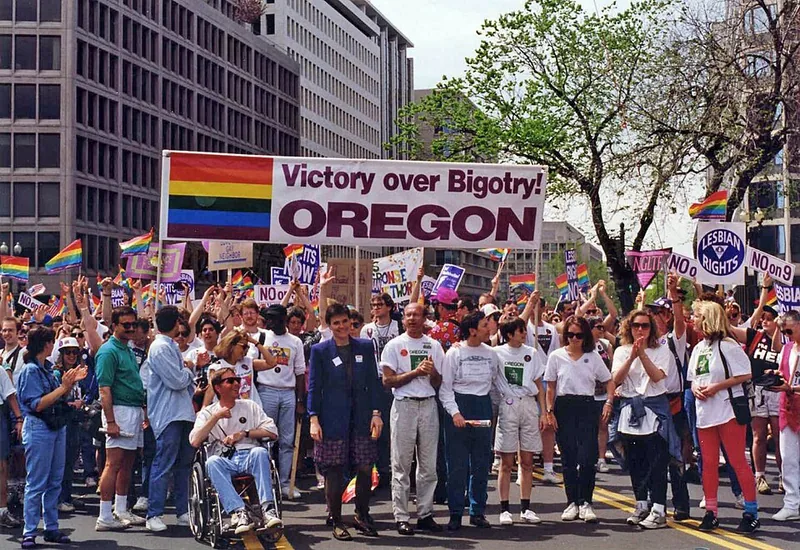
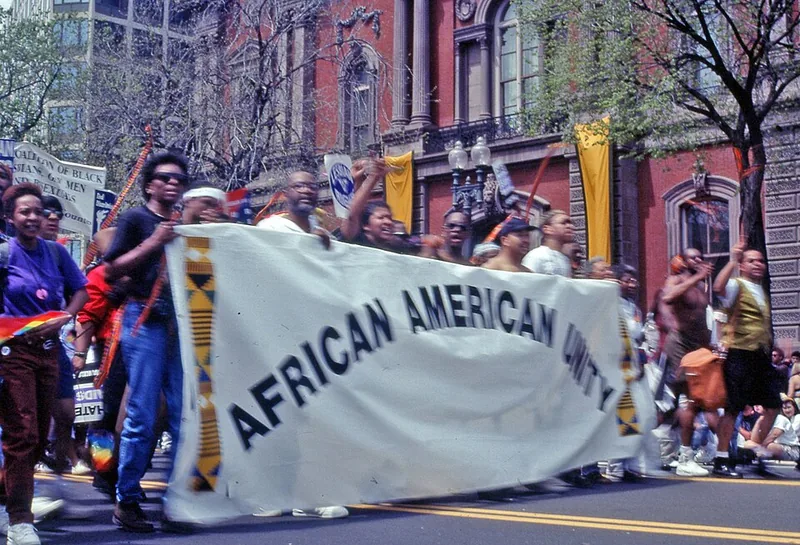
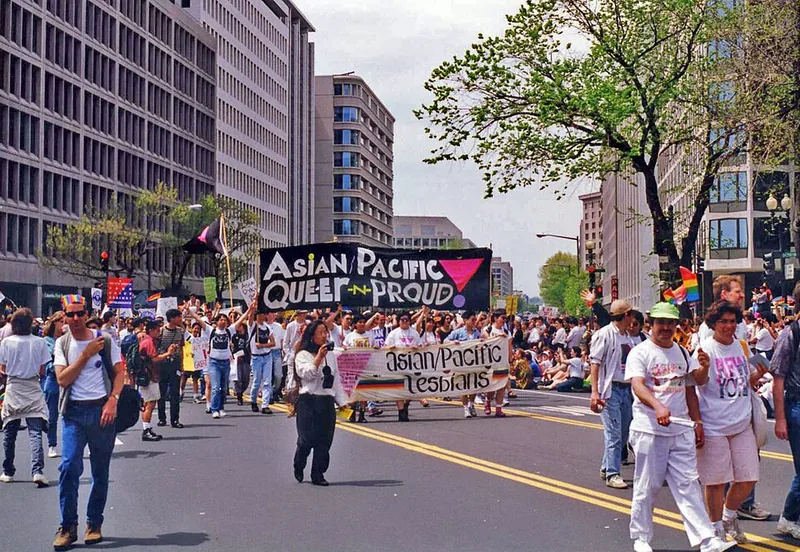
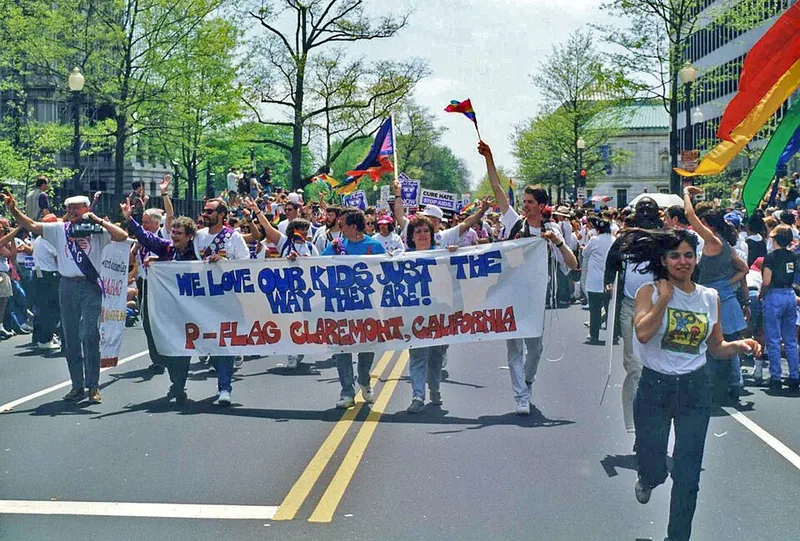
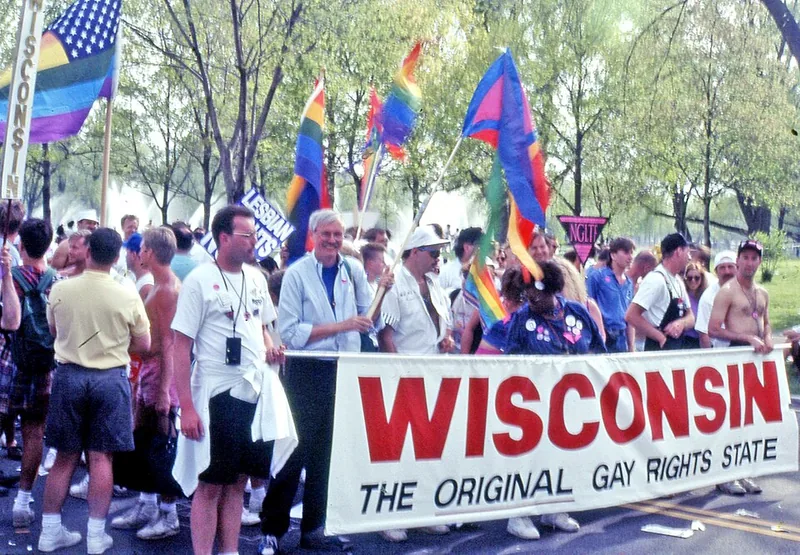
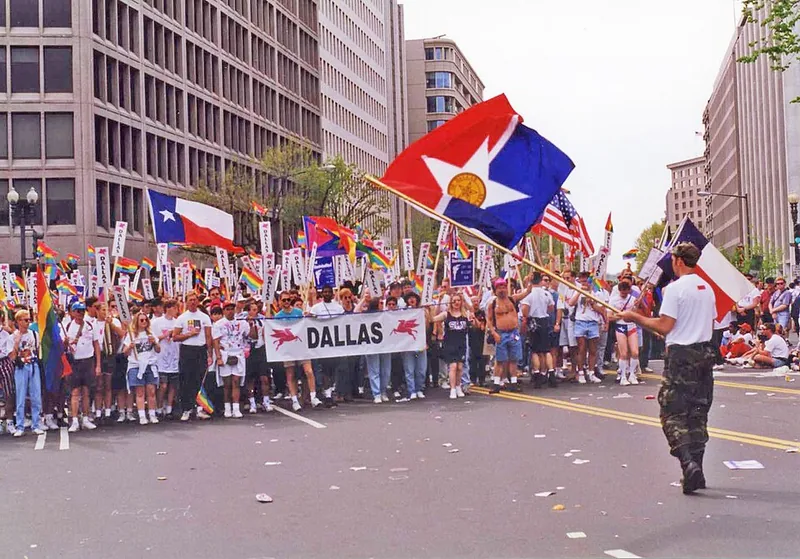
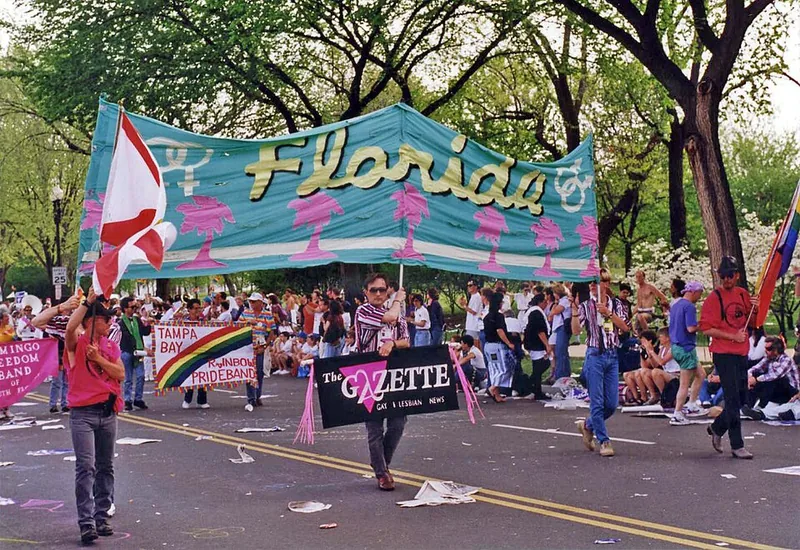
The march set off around noon near the White House and moved along Pennsylvania Avenue toward the Mall. People marched in contingents behind banners: by state and city, by college and profession, by cause. Some chanted "End the ban now!" against the military ban as they passed the White House. The only sizable counter-protest drew about 25 people. Police made five arrests, all for disorderly conduct.
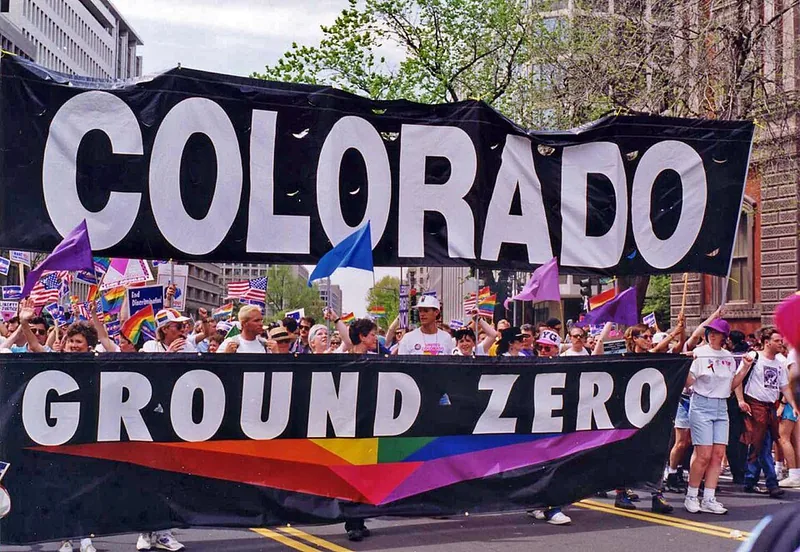
Colorado's marchers carried a banner calling their state "Ground Zero." Its voters had passed Amendment 2 the previous November, wiping out local laws that protected gay people from discrimination. Oregon's marchers came as winners: the same month, Oregon voters had rejected Ballot Measure 9, the most sweeping anti-gay measure of 1992.
The rally
After the march came hours of speeches and music on the Mall, until after seven in the evening. Among the speakers were Vaid, the activist Larry Kramer, the Reverend Jesse Jackson, Representative Nancy Pelosi, and the actor Ian McKellen; Melissa Etheridge, the Indigo Girls, and RuPaul performed.
President Bill Clinton was not there. Pelosi read a statement from him instead. "I stand with you in the struggle for equality for all Americans, including gay men and lesbians," it said. He recalled that nine days earlier he had met gay and lesbian leaders in the Oval Office: "I am told that this meeting marks the first time in history that the President of the United States has held such a meeting." Vaid was not at that meeting. Some speakers, Kramer among them, criticized the new administration's handling of AIDS.
In her own speech Vaid pointed out that the United States Holocaust Memorial Museum had been dedicated in Washington the same weekend. Her speech also held the line that President Biden would quote after her death: "The gay rights movement is an integral part of the American promise of freedom."
What came after
Within months, Congress wrote the military ban into law as "Don't Ask, Don't Tell." Three years later, in Romer v. Evans (1996), the Supreme Court struck down Colorado's Amendment 2. Many of the march's demands took decades more; some are still being fought for.
Thirty years earlier, Bayard Rustin had organized the 1963 March on Washington for Jobs and Freedom on the same ground. Read how he did it: March on Washington.
Read more
- Vaid's speech at the March, in Gifts of Speech.
- President Clinton, "Statement to Participants in the Gay Rights March," April 25, 1993.
- All 89 of James Steakley's photographs of the march, on Wikimedia Commons.