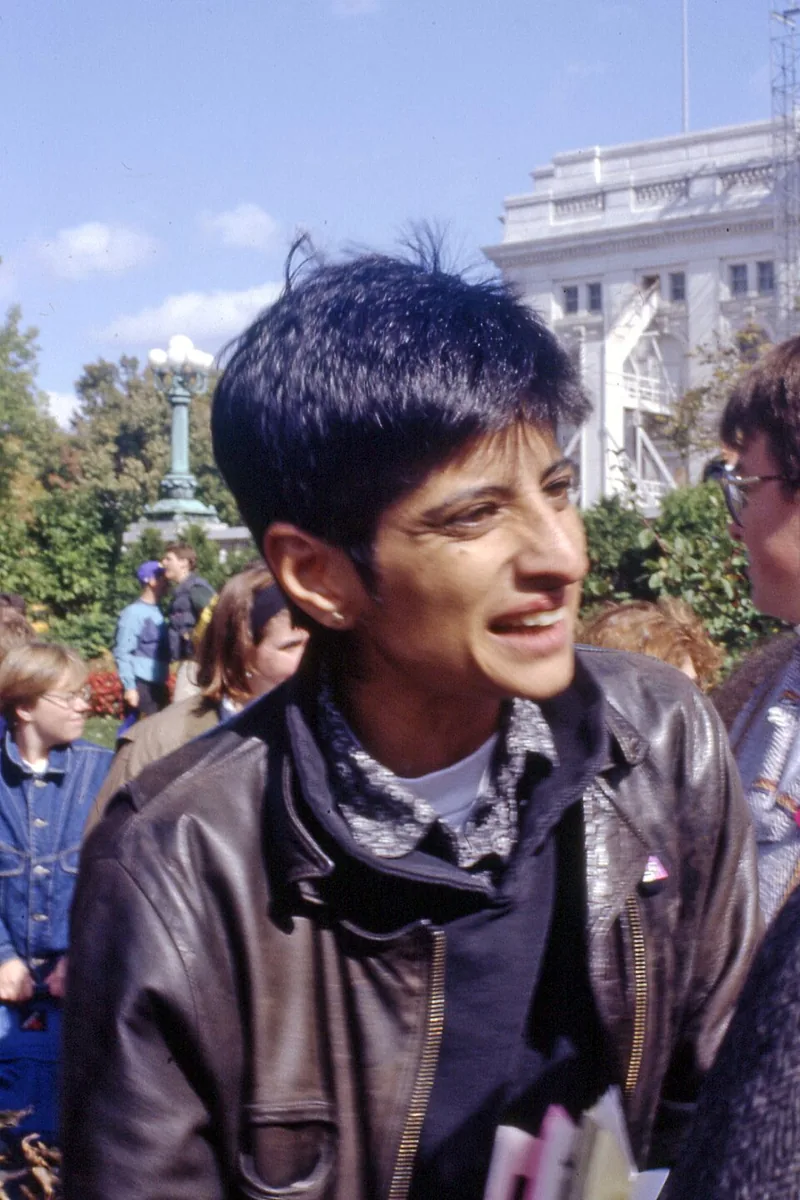
Urvashi Vaid spent more than forty years telling movements for justice to think bigger. Winning a place in the world as it is, she argued, was not the same as changing it. She led the oldest national gay and lesbian rights group in the country, stood up in front of a president with a protest sign, organized one of the largest marches Washington had seen, and wrote books that still start arguments.
From New Delhi to Potsdam
Vaid was born in New Delhi, India, on October 8, 1958, one of three daughters of the Hindi novelist Krishna Baldev Vaid and the poet and painter Champa Vaid. While her parents studied in the United States she lived with her grandparents. In 1966, when she was eight, the family settled in Potsdam, in far upstate New York, where her father taught English at the State University of New York.
She was political early. As a child she wrote letters to President Nixon about nuclear arms, marched against the Vietnam War, and gave speeches for George McGovern's 1972 campaign. She finished Potsdam High School in three years and left for college at sixteen.
Vassar and Boston
At Vassar College, from 1975, she studied English and political science and helped found the campus Feminist Union. She started the November 12th Coalition to protest admissions policies that students saw as sexist, and joined the campaign to make Vassar divest from apartheid South Africa. She graduated in 1979.
She moved to Boston, then one of the busiest centers of gay and lesbian organizing in the country. She worked as a legal secretary, helped start a neighborhood anti-violence network and the Boston Lesbian/Gay Political Alliance, and wrote for the weekly Gay Community News, where she also served on the board. She earned her law degree at Northeastern University in 1983.
AIDS behind bars
Her first job as a lawyer was at the American Civil Liberties Union's National Prison Project in Washington, from 1983 to 1986. There she started the project's work on HIV and AIDS in prisons, early in the epidemic, when people inside had almost no one speaking for them. The work stayed with her: in 1989, as head of the Task Force, she spoke on an "AIDS in Prison" panel at a national prison-reform convention in Washington.
Leading the Task Force
In 1986 she joined the National Gay and Lesbian Task Force as its media director. Two years later she and her colleague Sue Hyde started Creating Change, a national gathering to train local organizers, first held in Washington in November 1988. It still meets every year.
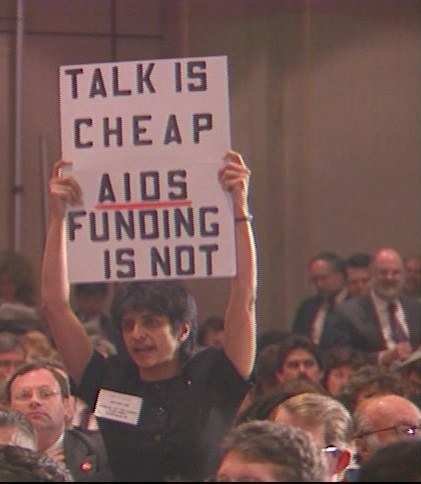
From 1989 to 1992 she was the Task Force's executive director, the first woman of color to lead a national gay and lesbian organization. On March 29, 1990, at President George H. W. Bush's first major speech on AIDS, she stood up in the audience holding a sign that read "Talk Is Cheap, AIDS Funding Is Not." Weeks later the White House struck her name from the guest list for the signing of the Hate Crime Statistics Act, a law her own organization had worked four years to pass.
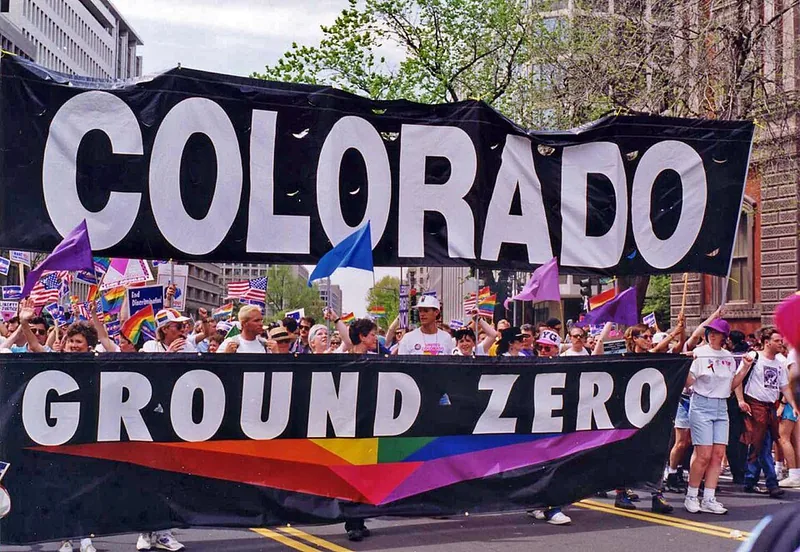
She also led the push for the 1993 March on Washington for Lesbian, Gay, and Bi Equal Rights and Liberation. Her January 1991 letter to organizations across the country called the first planning meeting, and on April 25, 1993, she spoke to the crowd on the National Mall.
Virtual Equality
Vaid left the Task Force at the end of 1992 to write. Virtual Equality: The Mainstreaming of Gay and Lesbian Liberation (1995) argued that the movement was mistaking visibility, acceptance, and access to existing institutions for real freedom. It won the 1996 Stonewall Book Award for nonfiction. She returned to the Task Force from 1997 to 2001 to run its think tank, the Policy Institute.
Her second book, Irresistible Revolution: Confronting Race, Class and the Assumptions of LGBT Politics (2012), pressed the same case: a movement that serves only its most comfortable members leaves most queer people behind. A collection of her writing, The Dream of a Common Movement, edited by her sister Jyotsna Vaid and Amy Hoffman, followed in 2025.
Money, power, and new institutions
In the 2000s Vaid moved into philanthropy, first at the Ford Foundation and then as executive director of the Arcus Foundation from 2005 to 2010. From 2011 to 2015 she directed the Engaging Tradition Project at Columbia Law School, which studied how appeals to tradition shape fights over gender and sexuality.
She kept building. She helped found LPAC, launched in 2012 as the first lesbian super PAC, the Donors of Color Network, and the 22nd Century Initiative. At her death she ran the Vaid Group, a consultancy for organizations working on equity and justice.
Kate Clinton and the last years
In 1988, at a gathering of gay rights leaders in Warrenton, Virginia, she met the comedian Kate Clinton. They were together for the rest of her life, married in 2013, and divided their time between Manhattan and Provincetown, Massachusetts. Vaid died of breast cancer at their home in New York on May 14, 2022. That year she was added to the National LGBTQ Wall of Honor at the Stonewall Inn.
A month after her death, President Joe Biden quoted a line from her 1993 March speech as he signed an executive order on LGBTQI+ equality:
“The gay rights movement is an integral part of the American promise of freedom.”
Read, listen, watch
- Read Virtual Equality (Penguin Random House) and The Dream of a Common Movement (Duke University Press).
- Read her speech at the 1993 March on Washington in Gifts of Speech.
- Listen to her own voice in 1989, at her Task Force office, in the Making Gay History podcast's Urvashi Vaid episode.
- Watch There Are Things To Do (2023), a short film about her life with Kate Clinton, on PBS.
- Explore OutHistory's exhibit on her Vassar and Boston years.