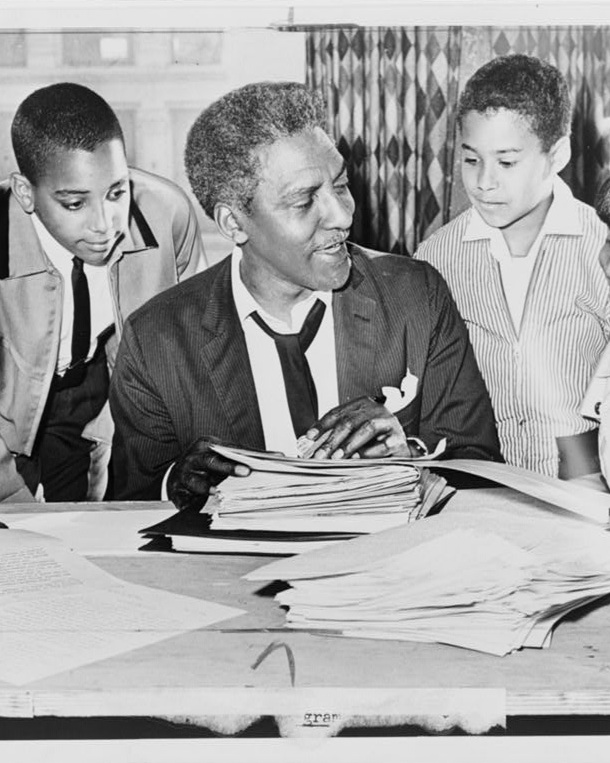
This site already shows Organizing Manual No. 2, the final instructions Bayard Rustin's office sent out for the March on Washington, from a clean copy at the Smithsonian (see it here). The National Archives holds another copy of the same pamphlet. This one was kept by the House Committee on Un-American Activities, the committee that spent decades hunting Communists, and someone has gone through it with a pen.
Ovals around the names
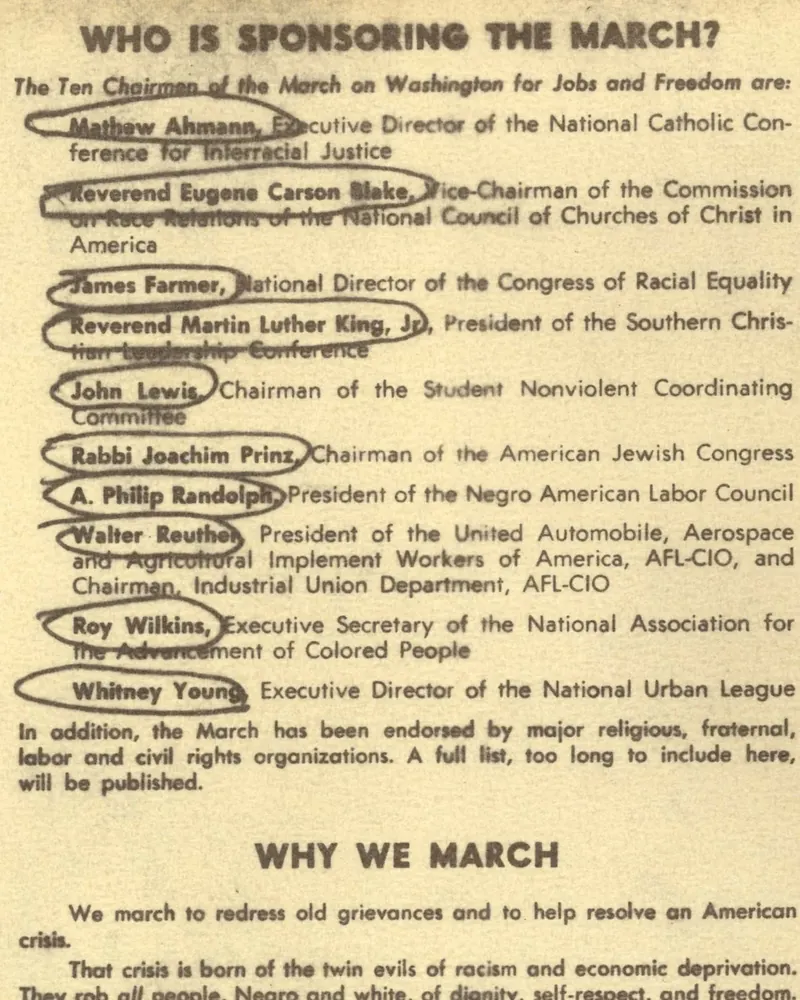
On the page headed "Who Is Sponsoring the March?" every one of the ten chairmen is ringed in ink: Mathew Ahmann, Eugene Carson Blake, James Farmer, Martin Luther King Jr., John Lewis, Joachim Prinz, A. Philip Randolph, Walter Reuther, Roy Wilkins, and Whitney Young. On the cover two more names are circled, the ones printed at the bottom of the page: Cleveland Robinson, chairman of the administrative committee, and, in a single oval with his title, "Bayard Rustin, Deputy Director."
Nothing in the file says who drew the ovals, or why. The pamphlet survives among the committee's records with the other March material it gathered that summer. You can see the whole marked copy, with a transcript, in the House's copy of the manual.
Stop the marches
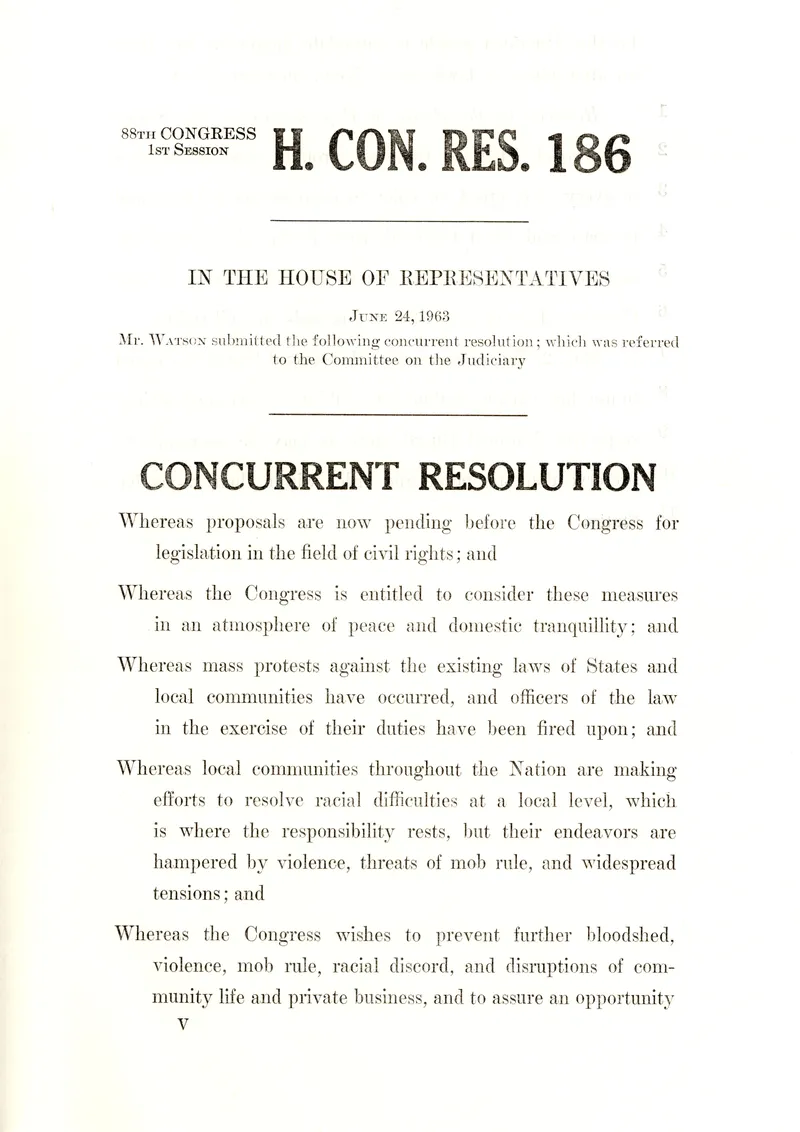
Some members of Congress tried to stop the March before it happened. On June 24, 1963, Representative Albert Watson of South Carolina introduced House Concurrent Resolution 186. It "strongly urges all citizens of every race, creed, or color to exercise self-restraint and to cease and desist forthwith from further demonstrations, mass marches, and violence" until Congress had finished with the civil rights bills, and it urged governors to call out the National Guard "to preserve domestic peace and order."
Three days later, Representative William Tuck of Virginia introduced H.R. 7329, a bill to make it a federal crime to cross a state line "for the purpose of violating the laws of any State." Its preamble blamed "certain persons and organizations, with diverse ulterior motives," for entering states "for the purpose of fomenting disobedience to their laws." Read against that summer, it described the March's own organizers and the buses they were filling.
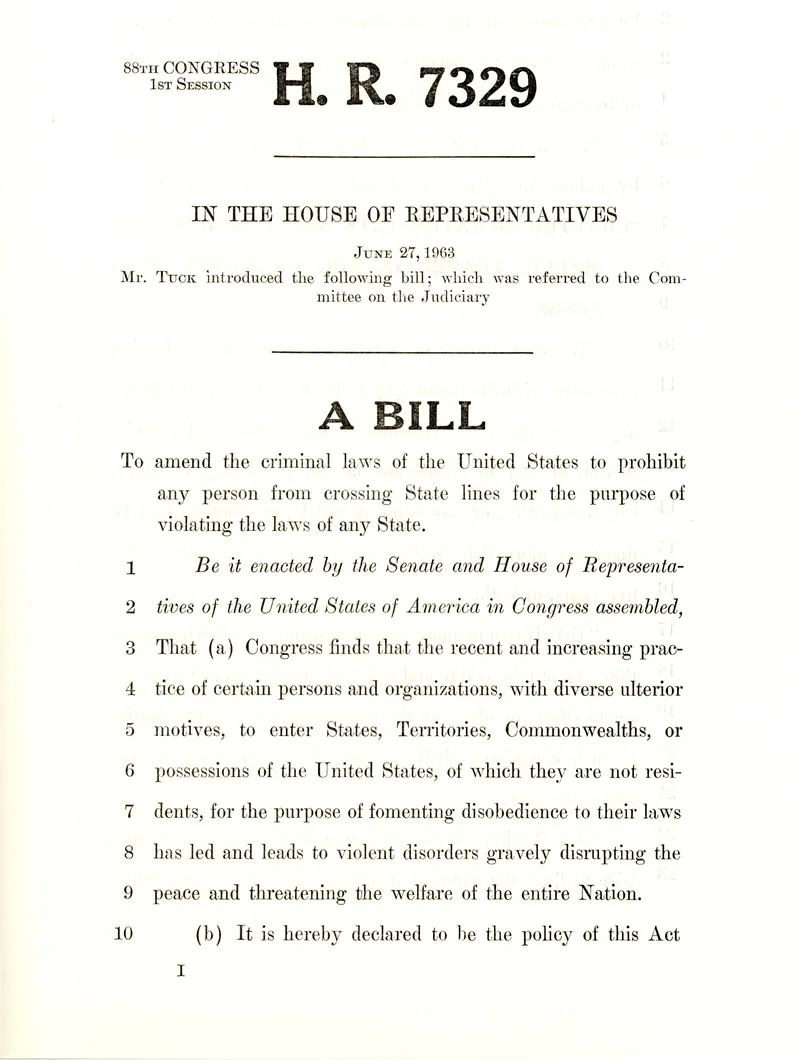
Both went to the House Judiciary Committee. Neither came back out.
"Commanded by Communist"
The committee's files also hold an August–September 1963 issue of Heads Up, an anti-Communist newsletter from San Diego. Its headline read "March on Washington Commanded by Communist." It called the March "the greatest and most successful Communist coup in the history of the red international machinations in our nation," and said its real leader was not King "but one Bayard Rustin." The article ran through his old Young Communist League ties, his wartime prison term, and his 1953 Pasadena conviction, and it got several facts wrong along the way.
The same charges had already been made on the floor of Congress. On August 13, Senator Strom Thurmond had Rustin's police record printed in the Congressional Record, and later that month Representative John Ashbrook wrote to the March's leaders asking whether they had known Rustin's past when they hired him (Arrested, Attacked, Pardoned).
The other side of the file
Not everything Congress received that summer was hostile. Two days before the March, a citizen named David Willmarth wrote to Representative Emanuel Celler, chairman of the Judiciary Committee, defending the marchers' "constitutional right to come to Washington to impress upon the legislators their feelings." And the Massachusetts House of Representatives sent Congress resolutions, adopted on June 24, 1963, the same day as Watson's, that urged it "to enact the civil rights proposals of President Kennedy." The National Archives files them with its March documents as an endorsement of the March, though the resolutions themselves never mention it.
The committee's files reached across the world, too: they hold Mao Zedong's statement backing the marchers and Roy Wilkins's reply to a message from Beijing (Mao, Wilkins, and the March).
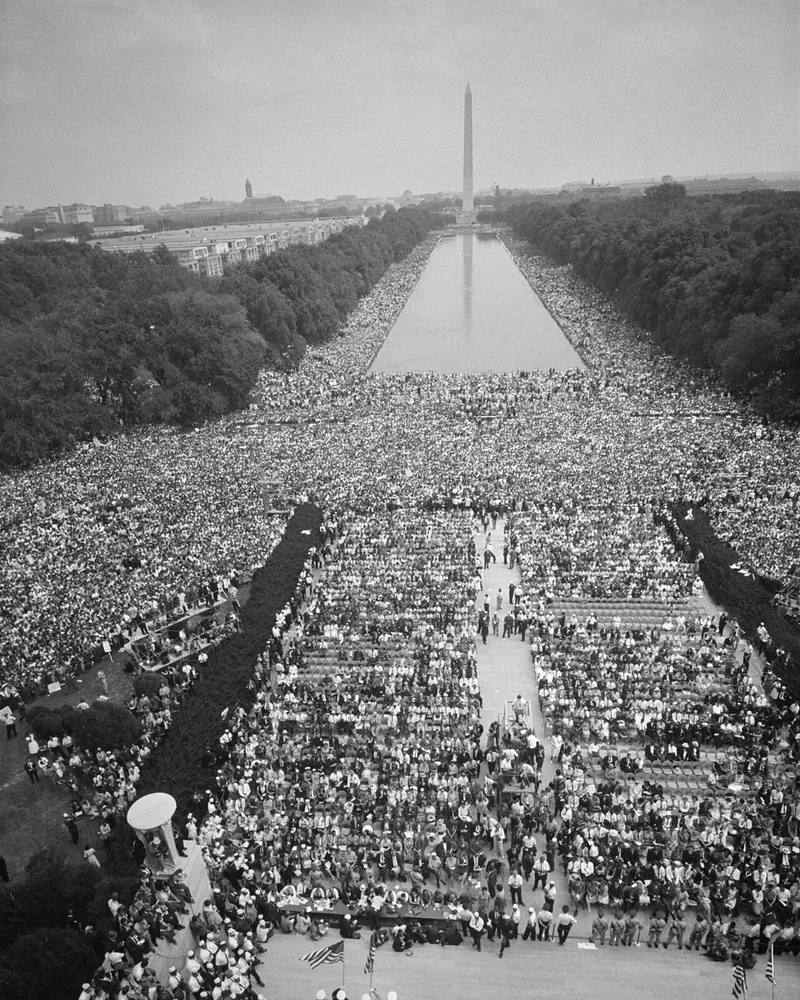
On August 28 about 250,000 people came anyway. The March went as planned, down to the routes printed in the manual someone in Congress had marked up.
Sources
- Final Plans for the March on Washington for Jobs and Freedom (Organizing Manual No. 2), Committee on Un-American Activities, Records of the U.S. House of Representatives, RG 233 (NAID 7479801).
- H. Con. Res. 186, June 24, 1963 (NAID 7479794); H.R. 7329, June 27, 1963 (NAID 7479796); Committee on the Judiciary, RG 233.
- Heads Up No. 2, August–September 1963, Committee on Un-American Activities, RG 233 (National Archives feature).
- David Willmarth to Rep. Emanuel Celler, August 26, 1963 (NAID 7479798); Massachusetts House of Representatives, resolutions adopted June 24, 1963 (NAID 7479795).
- National Archives, Center for Legislative Archives, "The March on Washington for Jobs and Freedom."