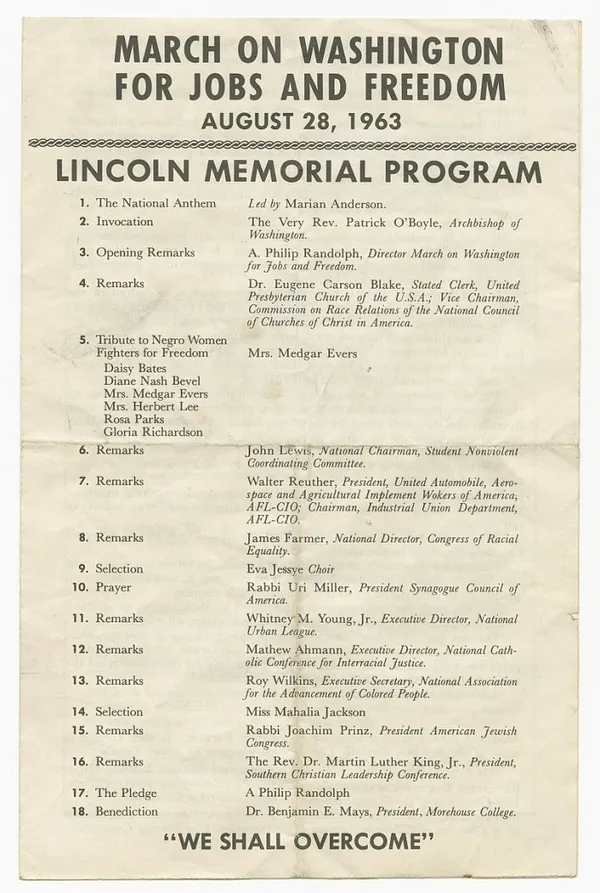
Bayard Rustin traveled more than almost anyone in the movement, to India, Ghana, London, the Sahara, and dozens of American cities (Rustin Abroad). For the last twenty-five years of his life, he came home to the same apartment in Manhattan.
Apartment 9J
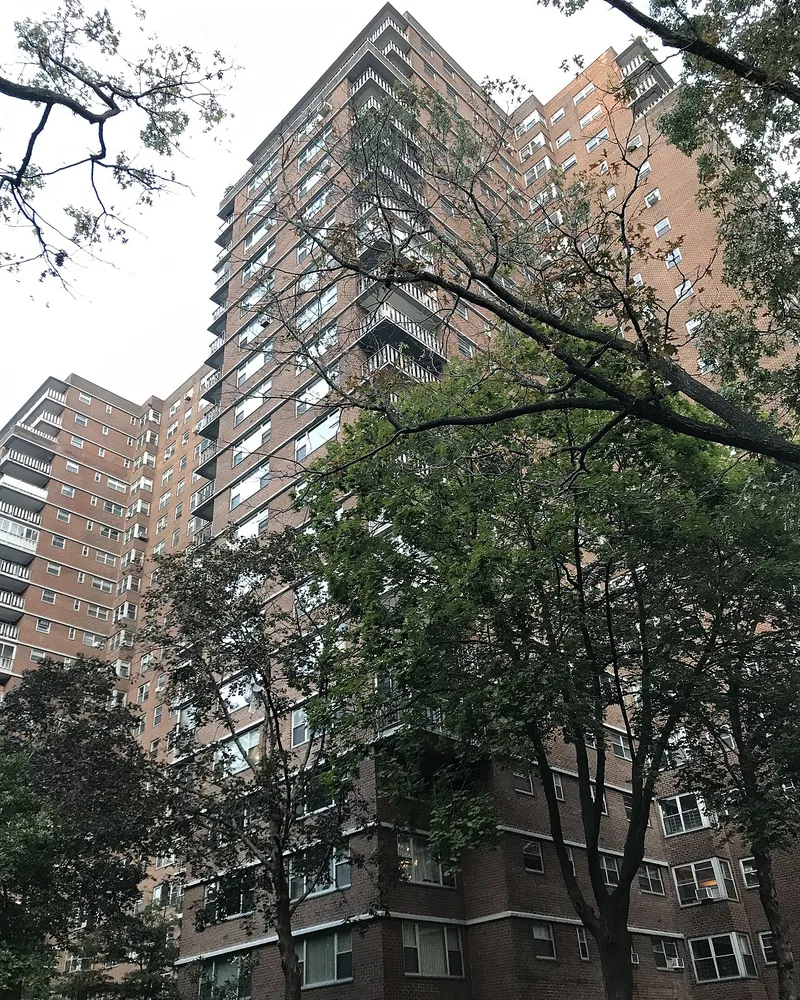
In 1962, Rustin bought apartment 9J in Building 7 of Penn South, a new housing cooperative between Eighth and Ninth Avenues and West 23rd and 29th Streets, in Chelsea. The International Ladies' Garment Workers' Union had sponsored the development: ten 22-story buildings with 2,820 apartments, built so that working people could own their homes. Rustin, a lifelong ally of the labor movement, moved in on September 11, 1962, and lived there until his death in 1987.
According to the National Park Service, it was "his longest and most permanent place of residence as an adult." In the years he lived there he organized the March on Washington, led the A. Philip Randolph Institute, and traveled the world for Freedom House and the International Rescue Committee. In 1977 his partner, Walter Naegle, moved in. Naegle still lives there and has kept the apartment almost exactly as Rustin left it.
The last campaign
From Chelsea, in the mid-1980s, Rustin took up the fight for New York City's gay and lesbian rights bill. He testified at City Council meetings against amendments meant to weaken it, and wrote to Mayor Ed Koch about what fifty years of fighting for human rights had taught him:
“No group is ultimately safe from prejudice, bigotry, and harassment so long as any group is subject to special negative treatment.”
On the National Register
On March 8, 2016, the National Park Service listed the Bayard Rustin Residence, 340 West 28th Street, on the National Register of Historic Places, the nation's official list of places worth preserving. The building is a private home and is not open to the public.
A school in his name
Ten blocks south, on West 18th Street, a 1930 school building that began as Textile High School reopened in 1983 as the High School for the Humanities and was later renamed for Rustin. Bayard Rustin High School for the Humanities graduated its last class in 2012, but the building, now the Bayard Rustin Educational Complex, still carries his name and houses several small public schools, among them one named for James Baldwin. Its auditorium is lined with murals painted in 1934–35 under the Federal Art Project.
Sources
- National Park Service, "Bayard Rustin Residence," National Register of Historic Places reference 16000062.
- Wikipedia, "Penn South" and "Bayard Rustin Educational Complex."