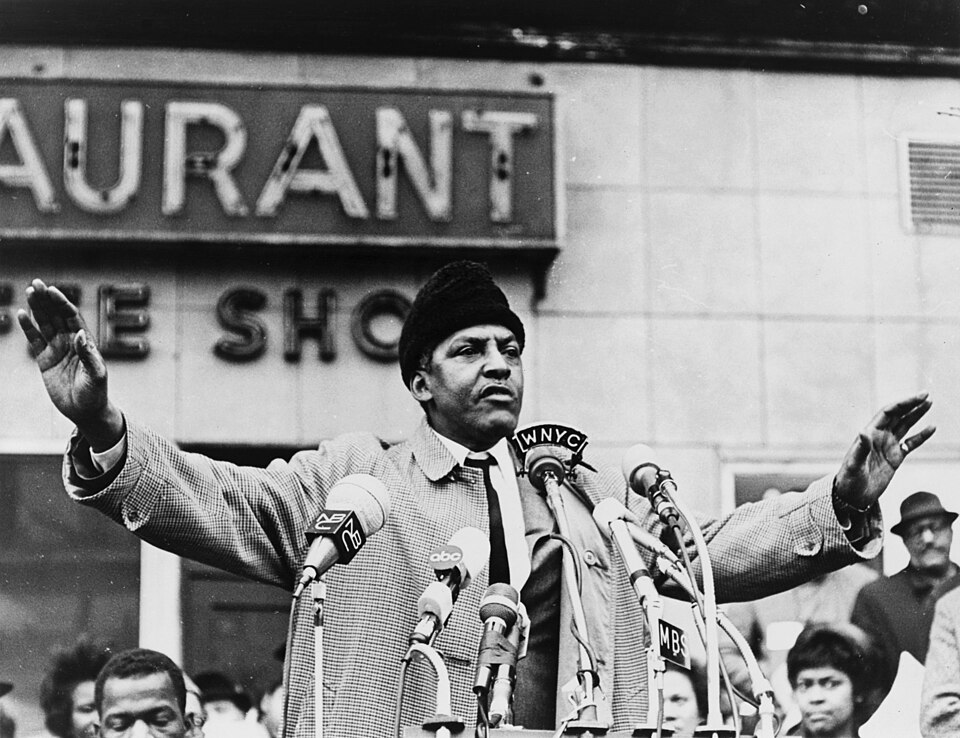
Long before he organized the March on Washington, Bayard Rustin was testing nonviolence on himself: on a bus in Kentucky and Tennessee, and then for more than two years inside federal prisons. What he learned there, he used for the rest of his life.
The bus to Nashville, 1942
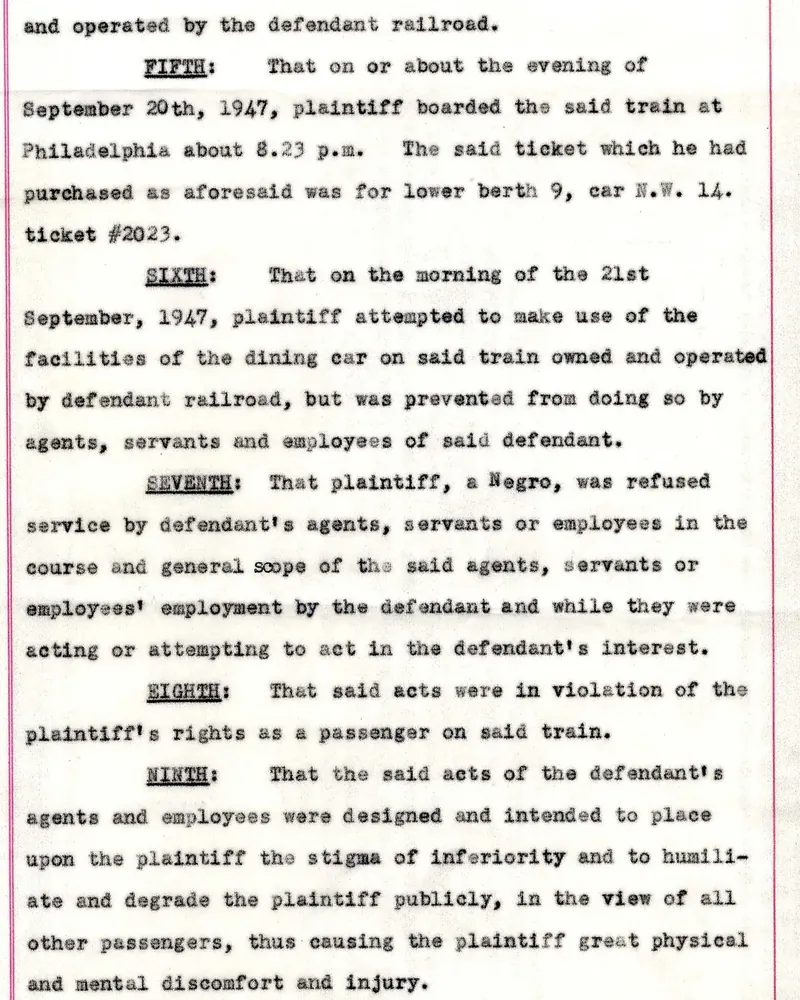
In 1942 Rustin boarded a bus in Louisville, Kentucky, bound for Nashville, and sat in the second row. Driver after driver told him to move to the back, as Southern custom demanded. He refused. Thirteen miles north of Nashville, police stopped the bus and arrested him. He was beaten and taken to a police station, then released without charge.
Decades later he told the Washington Blade why he had refused. As he walked down the aisle, a small white child reached out to play with his necktie, and the child's mother told it not to touch him, using a racial slur. If he went quietly to the back, he said, the child would grow up believing Black people were content there. "I owe it to that child," he said, to show otherwise. In the same interview he said the moment also made him see that he had to be open about being gay, because hiding it would make him part of the prejudice.
That same year he helped found the Congress of Racial Equality, built on Gandhi's methods of nonviolent resistance, and went to California to help protect the property of Japanese Americans forced into internment camps.
Refusing the war
Rustin was a Quaker and a pacifist. When he was called up for the Second World War, he refused, as a conscientious objector, even to report for the draft's physical examination. He was convicted under the Selective Service Act and sentenced to three years in federal prison.
Ashland, Kentucky
He was sent first to the federal prison at Ashland, Kentucky, arriving on March 9, 1944. The prison's admission summary, written four weeks later, already saw what was coming. Rustin had asked to teach in the prison's education department, and had said that if he was not placed there, it would show "that the institution desires to follow a short-sided [sic] policy of race segregation." The summary concluded: "It is believed that this inmate will continue to bring up racial problems in the institution, as has been his practice before being committed here." His adjustment, it said, "is doubtful."
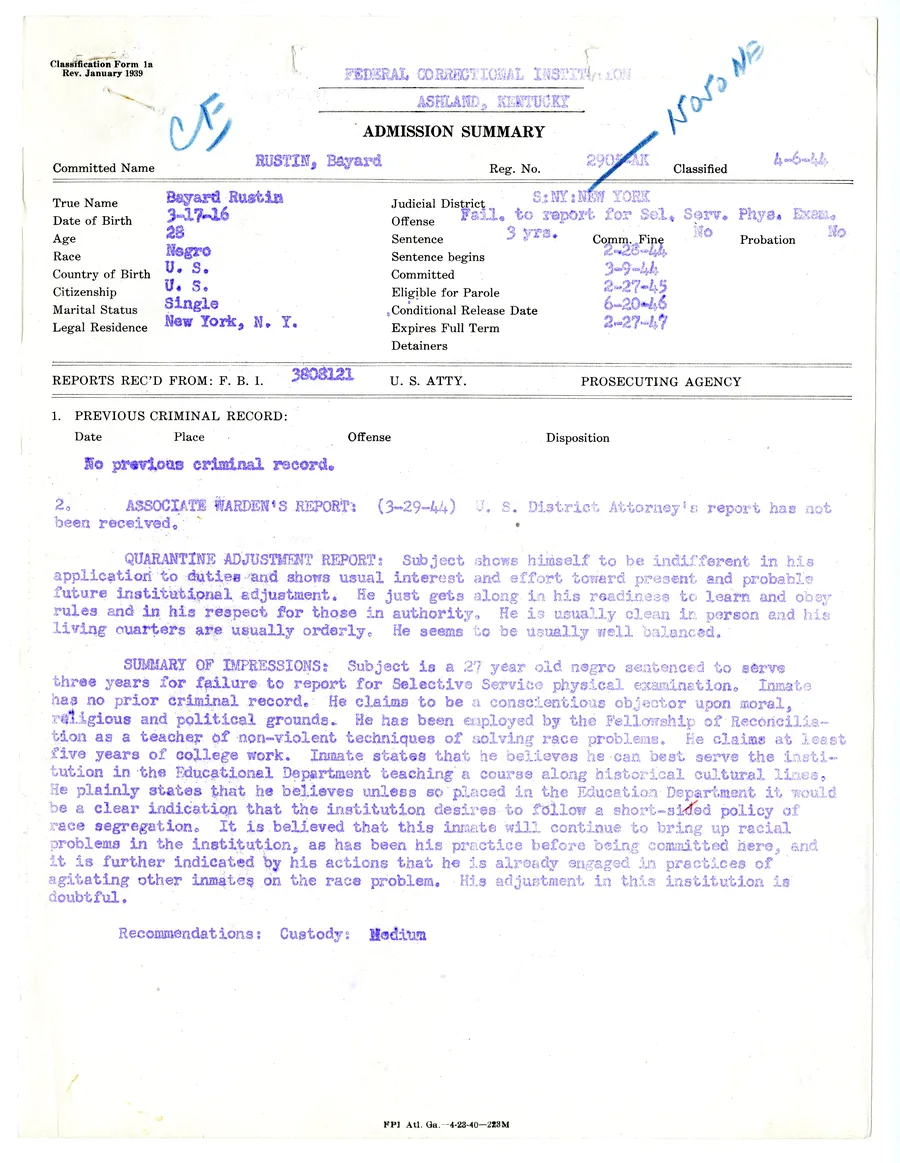
The prison was segregated: Black and white prisoners slept in separate cell blocks and ate in separate dining halls. In 1944 Rustin, then 32, helped lead a nonviolent campaign inside the prison to integrate them, including a hunger strike. It partly worked. It also cost him time in solitary confinement and, in the end, a transfer as punishment.
Lewisburg, Pennsylvania
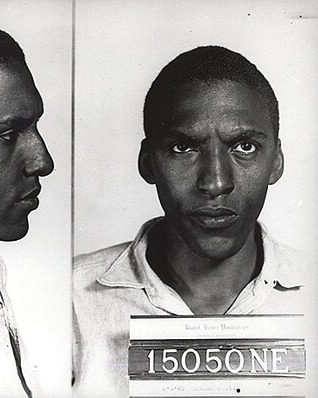
The transfer sent him to the federal penitentiary at Lewisburg, Pennsylvania, where this mug shot was taken.
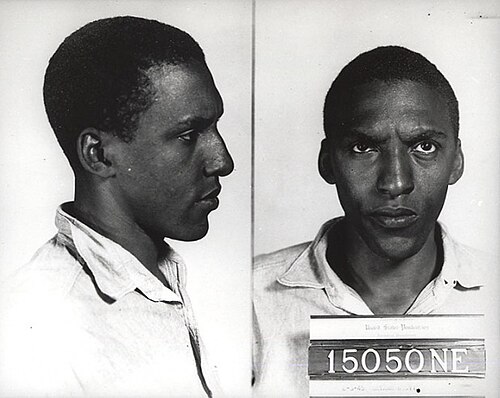
He kept protesting segregation there too. From prison he also organized the Fellowship of Reconciliation's Free India Committee, in support of India's fight for independence from Britain. He was released in 1946.
His prison file, now at the National Archives, records how much trouble one quiet pacifist could cause: disciplinary reports, letters from his mentor A. J. Muste, and plans Rustin drew up for how the prison could be desegregated.
What prison taught him
A year after his release he was on the road again, riding the buses of the Upper South on the Journey of Reconciliation, the first Freedom Ride, and in 1949 he was back behind bars, this time on a North Carolina chain gang. By then he had learned that a prison, a bus, or a lunch counter could be a stage, and that the person willing to be arrested, calmly and on purpose, held more power than the people arresting him. Nearly twenty years after Ashland, he would teach that lesson to a quarter of a million people at the March on Washington.
Read more
- The National Archives' blog posts on Rustin's prison file: "Bayard Rustin: The Inmate that the Prison Could Not Handle" and "Bayard Rustin, Civil Rights and Gay Rights Activist."
- The National WWII Museum, "Before Montgomery: Bayard Rustin and the Fight for Racial Justice During World War II."