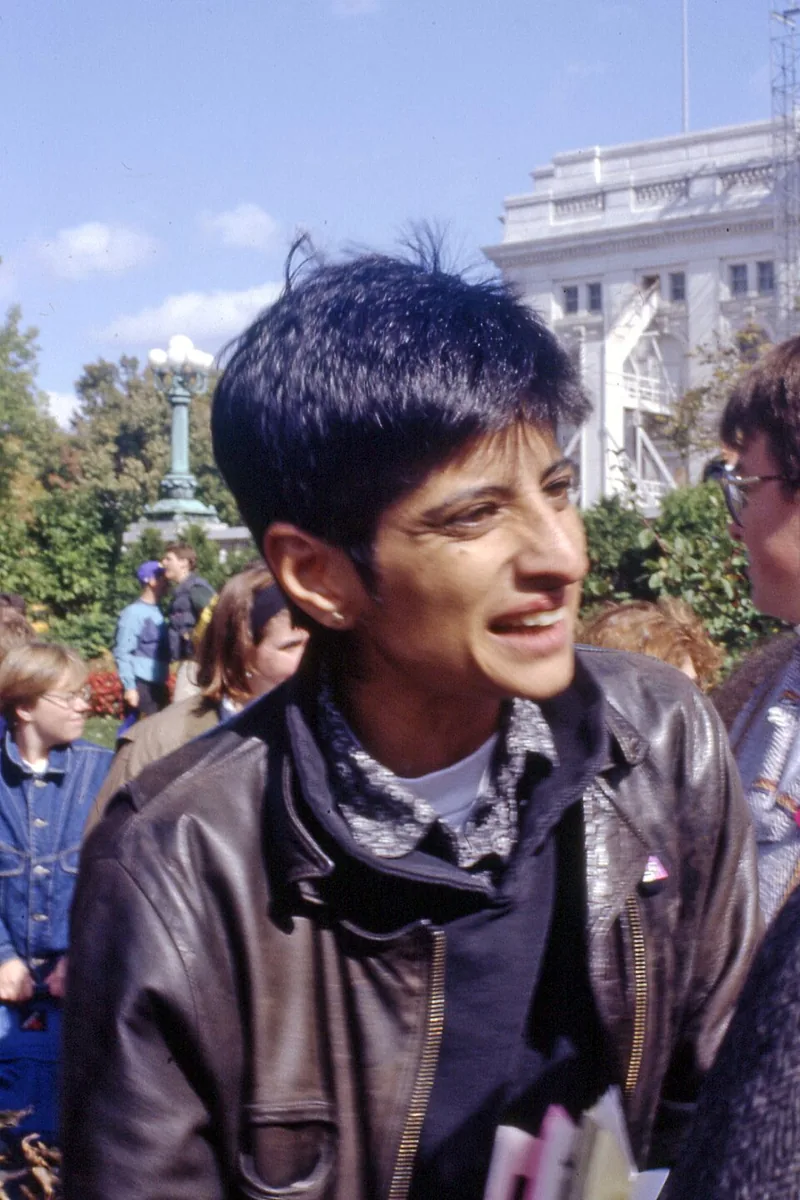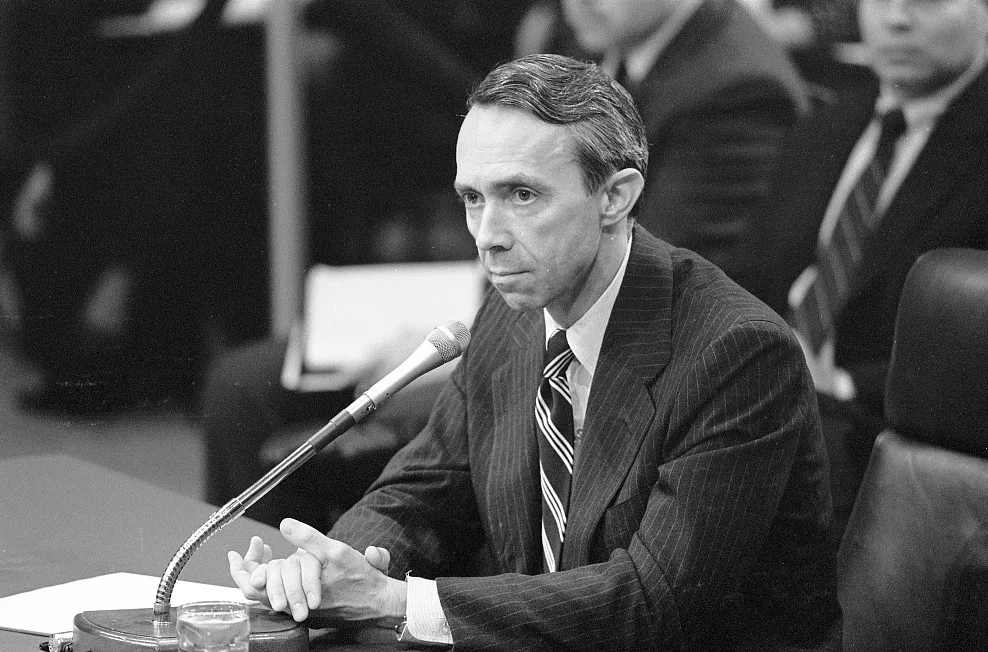
Seven weeks before Urvashi Vaid stood up with her sign at President Bush's AIDS speech (Talk Is Cheap), a congressman from California made sure her name was printed in the official record of the United States Congress.
Morning television
On January 31, 1990, CBS's This Morning interviewed Representative William Dannemeyer. The next morning, February 1, the show gave the other side its turn and put two gay rights leaders on the air: Vaid, the new executive director of the National Gay and Lesbian Task Force, and Tom Stoddard of the Lambda Legal Defense and Education Fund. Dannemeyer, a Republican from Orange County, California, was one of the loudest opponents of gay rights in Congress, and he did not appear with them. The host, Kathleen Sullivan, asked Vaid whether she would call him homophobic, and whether she saw him as "a bit of McCarthyism," as the congressman later transcribed it.
The congressman answers
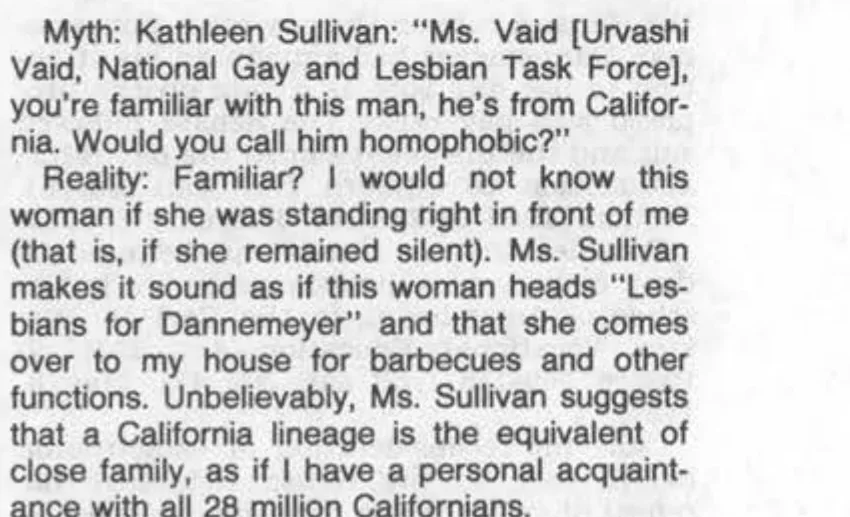
Members of Congress can add their own statements to the Congressional Record, in a section called Extensions of Remarks, without saying a word on the floor. Five days after the broadcast, on February 6, Dannemeyer did. Under the heading "CBS This Morning with Kathleen Sullivan," he printed a rebuttal of the host and her two guests laid out as "Myth" and "Reality," point by point.
One line was about Vaid herself:
“I would not know this woman if she was standing right in front of me (that is, if she remained silent).”
It is still in the Record, at volume 136, pages 1469 and 1470.
Not silent
Vaid did not remain silent. On March 29 she stood up, sign over her head, close to the President. In April the White House barred her from the signing of the hate-crimes law (Struck from the List). In September she testified before the Senate against a Supreme Court nominee (Before the Senate). By the end of the year, few people in Washington politics could have said they would not know her.
Source
- Congressional Record, vol. 136, pp. 1469–1470 (February 6, 1990), Extensions of Remarks, "CBS This Morning with Kathleen Sullivan," Hon. William E. Dannemeyer (govinfo).