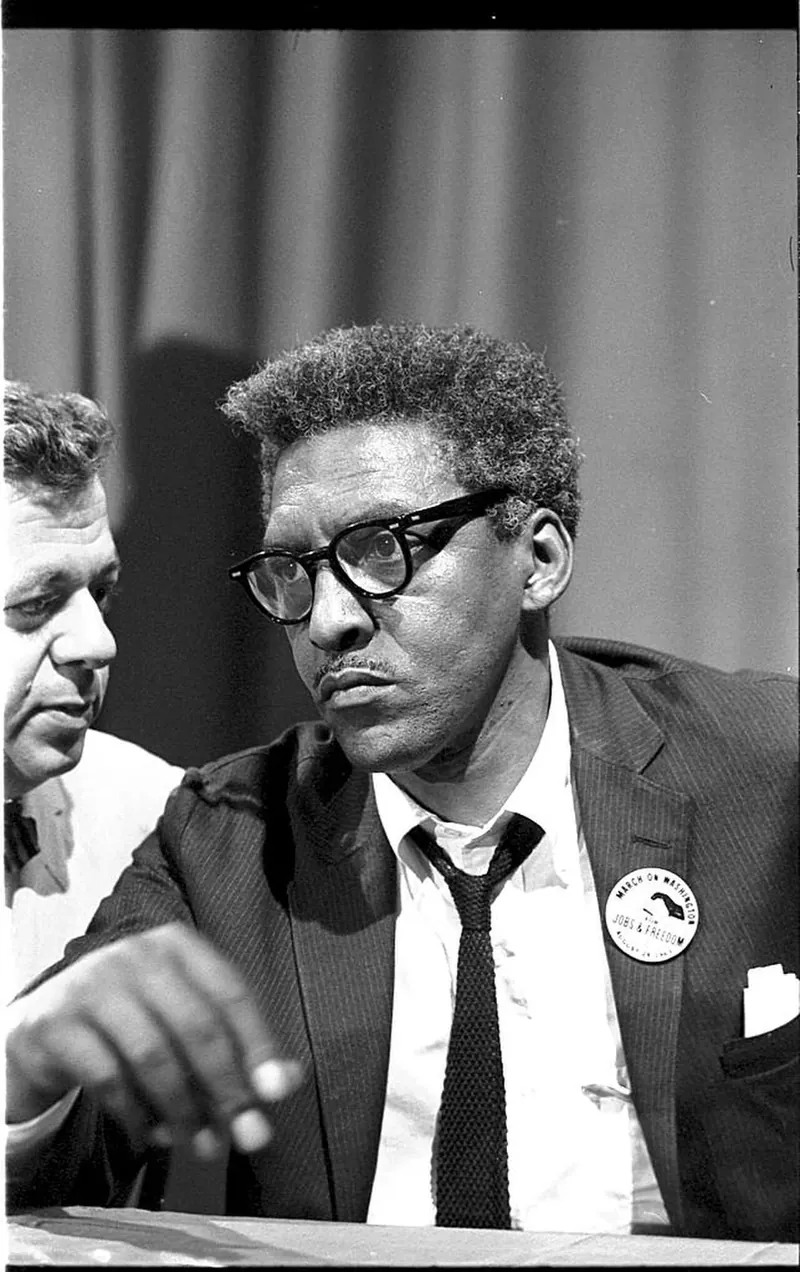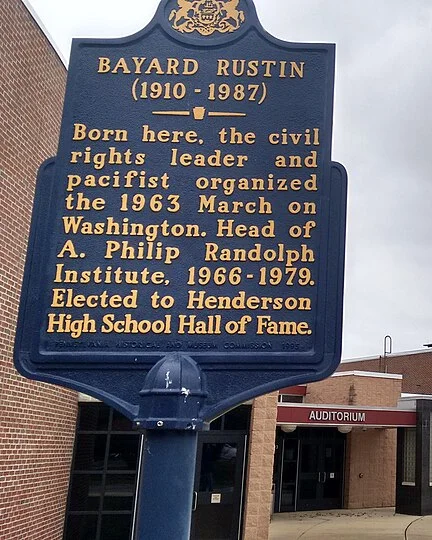
Fourteen years before the Freedom Riders of 1961 made national news, Bayard Rustin and fifteen other men boarded buses in Washington to test whether the South would obey the Supreme Court. It did not. Rustin paid for it on a chain gang. It took seventy-five years for a North Carolina court to say it had been wrong.
A ruling nobody enforced
In 1946, in Morgan v. Virginia, the Supreme Court ruled that segregated seating on buses crossing state lines was unconstitutional because it placed "an undue burden on commerce." The case began with Irene Morgan, a Black woman arrested in Virginia in 1944 for refusing to give up her seat. Southern states ignored the ruling, and bus companies kept enforcing their seating rules.
Rustin, then working for the Fellowship of Reconciliation, and George Houser, a white Methodist minister and a founder of the Congress of Racial Equality, decided to test it. They recruited eight Black men and eight white men to ride the buses together through Virginia, North Carolina, Tennessee, and Kentucky. After taking advice, they kept to the Upper South on purpose, away from the Deep South, where the risk of violence was highest. The Black riders would sit in the front of the bus, the white riders in the back or beside them, and when told to move, they would refuse.
Two weeks on the road
The Journey of Reconciliation left Washington on April 9, 1947, and passed through Richmond and Petersburg into North Carolina. In Durham a driver reported Rustin for refusing to move to the back; the police did nothing, and the bus simply sat for forty-five minutes until it went on.
Chapel Hill was different. On April 13 police arrested four riders there: Rustin and Andrew Johnson, a Black student from Cincinnati, for keeping their seats, and two white riders, Igal Roodenko and Joe Felmet of the Southern Workers Defense League, for standing with them. When the white rider James Peck went to pay their bail, a taxi driver struck him in the head. The next day a white student and war veteran, Martin Watkins, was beaten by taxi drivers for talking with a Black woman at a bus stop.
The riders finished the route through western North Carolina, Tennessee, and Kentucky and came home to Washington. They had been arrested several times along the way, notably in North Carolina.
The chain gang
The riders arrested in North Carolina were tried and convicted in 1947. One judge made his reasoning plain: in racist and antisemitic words, he told the white riders he was giving them a longer sentence than the Black riders to teach them a lesson. Their appeals failed. On March 21, 1949, Rustin, Roodenko, and Felmet surrendered at the courthouse in Hillsborough and were sent to segregated chain gangs.
Rustin served twenty-two days at hard labor on a road gang near Roxboro. He kept a journal, and later published his account of those weeks as "Twenty-Two Days on a Chain Gang."
The Journey became the model for what came next. James Peck rode again in the Freedom Rides of May 1961, the campaign that finally pushed the federal government to enforce desegregation on interstate buses.
The apology
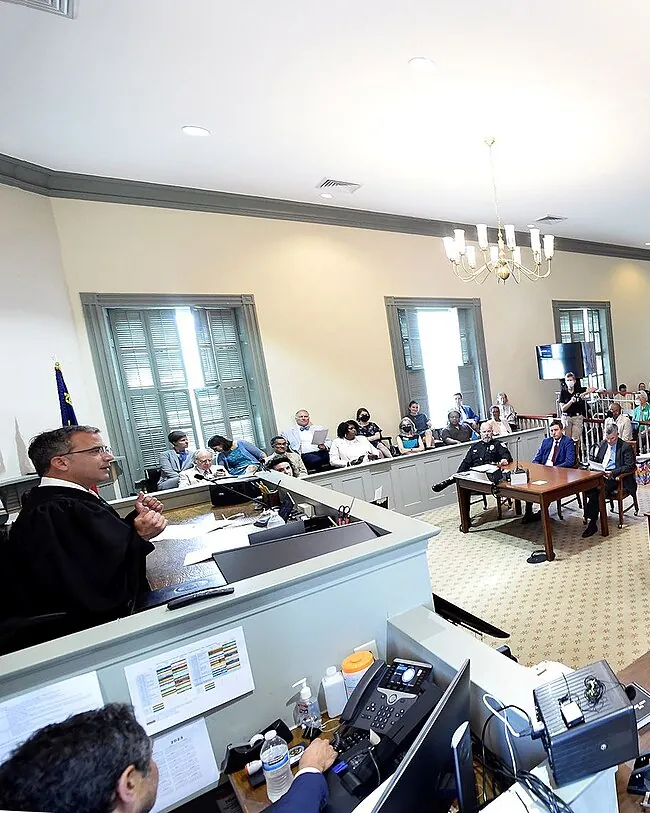
On June 17, 2022, in the Orange County courthouse in Hillsborough, Superior Court Judge Allen Baddour vacated the 1947 convictions of Rustin, Johnson, Roodenko, and Felmet, with the full consent of the state. The courtroom was full. Then the judge spoke for the court:
“We failed their cause and we failed to deliver justice in our community. And for that, I apologize.”
A North Carolina highway historical marker for the Journey of Reconciliation has stood in Chapel Hill since 2008.
Read more
- Rustin's life from the start: Bayard Rustin Biography.
- Another conviction that took decades to undo: Arrested, Attacked, Pardoned.
- Orange County's page on the 2022 court session.
- NBC News, "Freedom Riders' convictions vacated in North Carolina 75 years later."